
Latah Detention Release Paths
The Latah County Detention Center no longer operates solely as the overnight county jail described on its older detention page. A 2025 sheriff announcement said the courthouse-basement operation would become a court-hours holding and booking facility. People arrested after hours ordinarily go to the Nez Perce County Adult Detention Center under contract. A person booked during the day who does not post bond also may be sent to Lewiston until another court order changes the custody path.
That split controls how a Latah County release should be read. A person who posts bond during local processing may leave from Moscow. Another person can leave the Latah facility only because transport to Nez Perce began. That second event is a transfer, not release to the community. Later exits can include bond, a court-ordered release, sentence completion, transfer to the Idaho Department of Correction, or movement to another authority.
Confirm a Latah Facility Release
Start with the name, booking date, booking number, and court case number when known. The Latah current roster is built for current custody. Its observed fields include the booking time, charges, bond, case number, and photograph, but research found no official release-date field or released-person archive. A missing name is only a reason to continue checking.
- Call the Latah County Sheriff at 208-882-2216 and ask whether the event was local release or transport.
- If custody moved to Lewiston, call Nez Perce custody staff at 208-799-3132. Its web report can lag.
- Check the court case in Idaho iCourt when the result may turn on bond, dismissal, sentence, or a later order.
- If the person entered state custody, use IDOC Resident/Client Search and read “In custody,” “In community,” or “Discharged” literally.
- Request the movement and release record from the agency that maintained the relevant event.
The broader Latah County released-inmate search and records path helps reconcile court, county, state, and notification sources when one system alone does not settle the question.
VINE may add a custody event or alert, but it is a notification service rather than the official release document. Federal or immigration custody requires a different route. A USMS, BOP, or ICE transfer ends Latah custody without proving that the person went home.
Latah Release Record Fields
A focused written request is the best route to the local custody event. Ask for an existing booking sheet and custody movement or release record, not a custom explanation. Give enough detail to isolate one booking. The custodian decides which maintained fields are public and whether an exemption requires redaction.
| Requested field | Why it matters |
|---|---|
| Booking number and admission time | Separates the event from older or later bookings. |
| Release or transfer date and time | Shows when Latah custody ended. |
| Release type or authority | Distinguishes bond, court order, sentence completion, and transfer. |
| Destination agency | Shows whether another jail or sovereign took custody. |
| Charges and case numbers | Connects the jail event to the court record. |
| Booking photograph | Helps identify the requested booking, if lawfully available. |
Idaho's Public Records Act begins with a presumption of access unless a record or part of it is exempt. Law-enforcement and correctional exemptions can protect security data, victim information, and future movement details. Ask for segregable nonexempt portions and the statute supporting any denial.
Latah Detention Records Contact
The Sheriff's Records Office is the practical first custodian for Latah booking material. It requires police and accident record requests in writing. A narrow request should identify the person, date range, booking number if available, and the precise custody fields sought. Active investigation material may be withheld, another agency's case must be requested from that agency, and records tied to a filed charge may instead rest with the prosecutor or court.
Latah County Sheriff's Office and Records522 S. Adams Street, Suite 100
Moscow, ID 83843
Main: 208-882-2216
Records: 208-883-2266
Records hours: Monday–Thursday, 7:00 a.m.–4:00 p.m.; Friday, 7:00–11:00 a.m., excluding holidays
Idaho Code section 74-103 supplies the response schedule. An Idaho resident generally receives a grant or denial within three working days, subject to a written extension of no more than ten working days. Eligible actual labor or copying charges may apply after the resident allowance in section 74-102. The reviewed Latah page does not post a special release-record fee.
Use the Latah Sheriff records page for the current form and office instructions. A Nez Perce custody or exit record needs a separate request to Nez Perce because Latah cannot release another agency's record.
Latah Bond Release Logistics
The older county bond instructions describe a distinctly local sequence. During court hours, bail was paid to the Court Clerk and the receipt taken to the Sheriff. After hours, payment went to the Sheriff's front window or through a bondsman. The page lists a separate $10 processing fee after court closes and on weekends. It estimated 30 to 60 minutes for booking, then about 30 more minutes for bond processing and release, with longer waits when workload or another problem intervened.
Those details are legacy guidance, not a promise for every current release. Overnight custody changed in 2025. A person held at Nez Perce may not physically exit at the old Sixth Street release point in Moscow. Before paying, traveling, or arranging pickup, ask the court or holding facility where the bond must be processed and where the person will leave custody.
The official bond page shows the older workflow and fee. Its screenshot makes the local bond route visible:
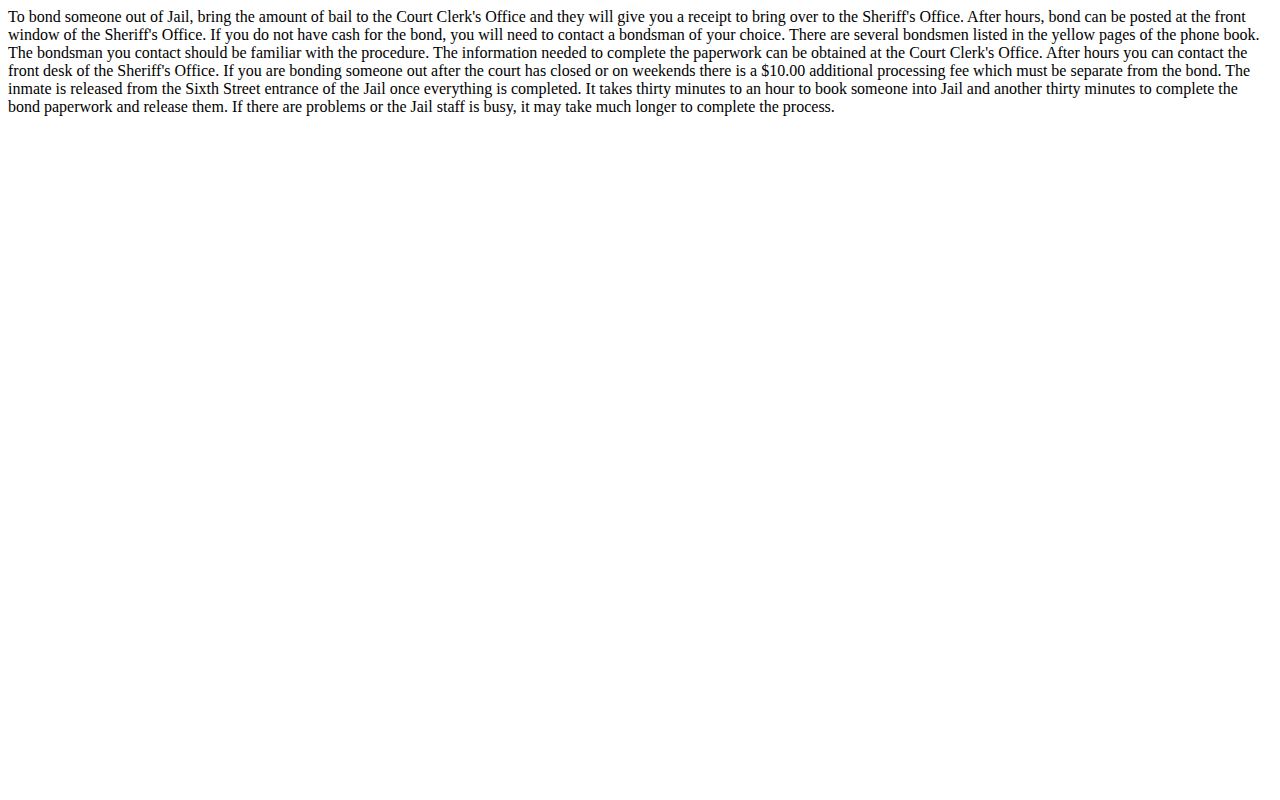
The image is useful for identifying the source, but a live confirmation is needed because the facility's role has changed.
Latah Detention Center History
The official legacy description says the jail was built in 1972 and could hold 38 adult men and women. It served Latah County, Moscow Police, Idaho State Police, IDOC, other counties, and federal agencies. Staff once handled admissions and releases around the clock. That account remains relevant to older records, yet it does not establish today's overnight location.
The Latah detention history page preserves the prior operating description. The matching source capture shows the county material used for that history:
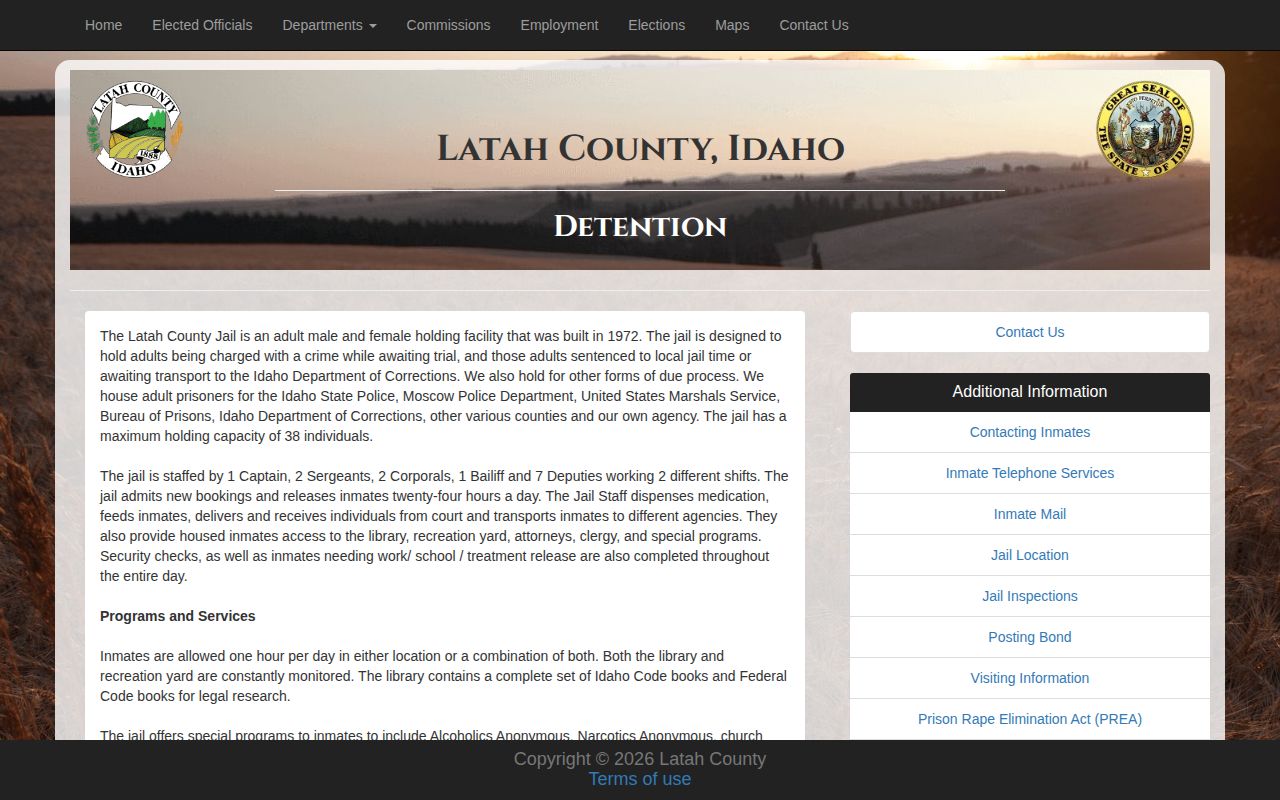
Read that historic page beside the later sheriff announcement, not as a stand-alone statement of current custody practice.
Latah Jail Transition and Planning
The 2025 transition is the facility's defining local angle. The sheriff said the old jail would shift to court holding and booking, and after-hours or non-bond detainees would go to Nez Perce County. The announcement cited an estimated $13 million need for system replacement. Current county planning remains at an early feasibility and community-input stage, with capacity, standards, rehabilitation, and reentry among the stated goals.
The sheriff's transition announcement is the key source for the changed custody flow. Its captured notice documents that shift:
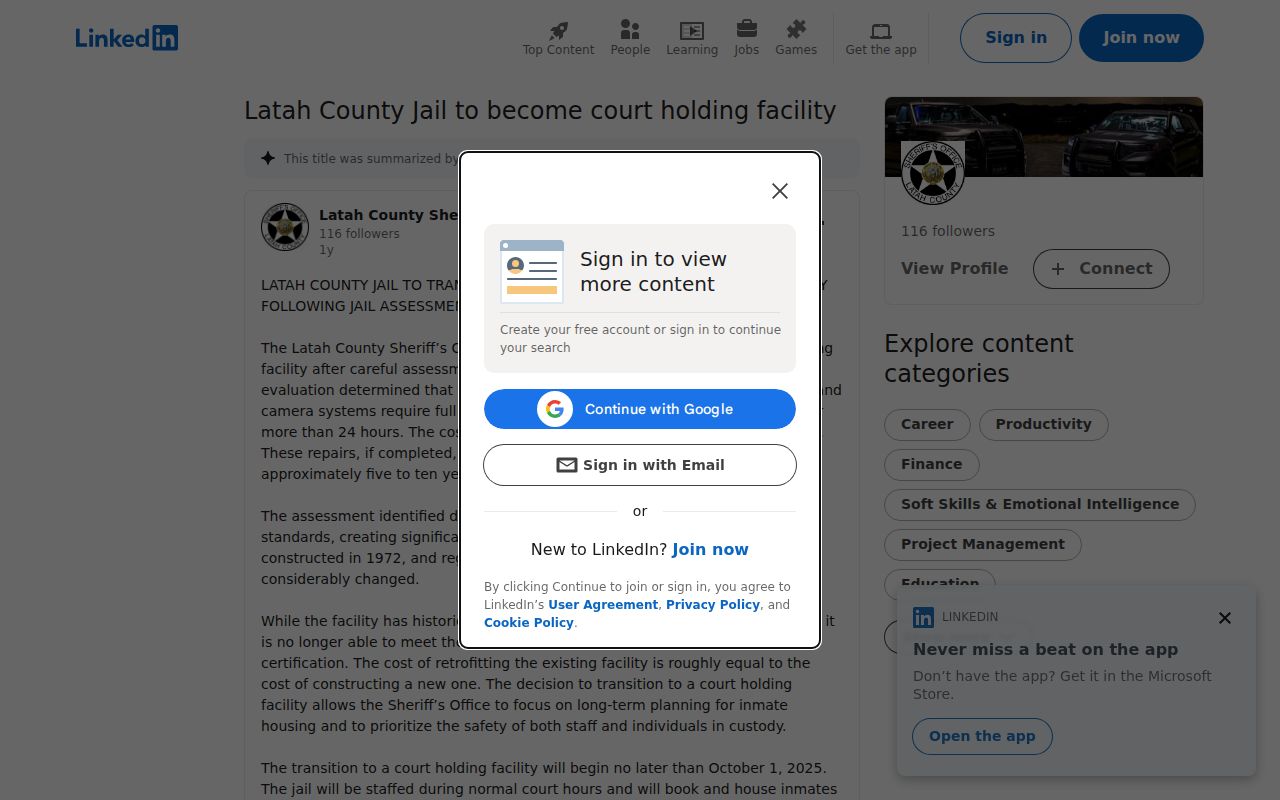
That change explains why both county contacts may be necessary to determine where a Latah detainee went.
Planning does not mean a new jail or new release program already exists. Current release verification must follow the actual booking and custody agencies in operation on the date in question.
Public Record Search
Sponsored Results